The 25th Anniversary of Women, Peace, and Security: The Light that Needs to Burn Brighter
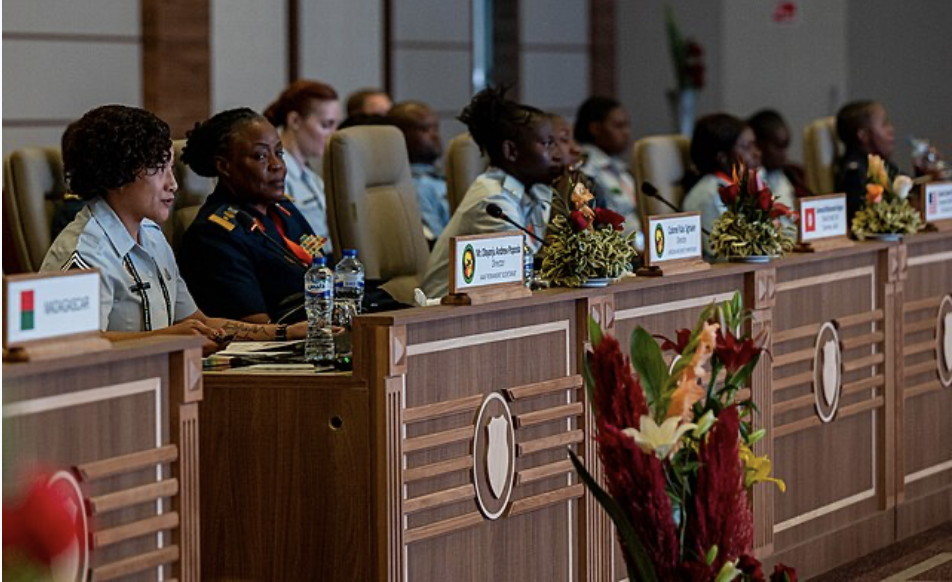
Source: Wikimedia Commons/Women, Peace and Security makes historic strides during AACS 2024
Introduction
This October 2025 marked the 25th anniversary of the Women, Peace, and Security (WPS) agenda, a framework endorsed by UNSCR 1325. This resolution by the UN Security Council marked a groundbreaking advancement for the international commitment towards women’s rights. During the United Nations’ annual WPS debate, speakers discussed the empowerment of women, but also the critical danger and conflict that women around the world are facing. During a time of various humanitarian conflicts and conservative leaders, the call for women to be represented in all facets of peacemaking is necessary for change.
The Influence of Women, Peace, and Security
In October 2000, the UN Security Council endorsed Resolution 1325 (UNSCR 1325), which responded to the necessity to address women on the brunt of conflict internationally. The Resolution urges Member States of the UN to ensure increased representation of women at all decision-making levels in national, regional, and international institutions, urges the Secretary-General to implement his plan of action to appoint women as special representatives, advance the role of women in peacebuilding, and other measures.
UNSCR 1325 initiated the WPS agenda, which rests on four pillars: (1) prevention of conflict and all forms of violence against women and girls in post-conflict situations (2) women’s equal participation and gender equality in peace and security decision-making at all levels (3) women’s and girls are protected from all forms of sexual and gender-based violence (GBV) and their rights are protected in conflict situations (4) specific relief needs of women are met and their capacities to act as agents in relief and recovery are strengthened in conflict and post-conflict situations. These four pillars are monumental in the international commitment for countries to accept, address, and advance women’s rights by adopting this framework into the context of their own countries. Member states create their own national actions plans (NAPs), which are documents that detail the actions a government is taking to meet its obligations under WPS. NAPs are crucial for countries to hold goals that support women and hold countries accountable if they do not address these goals. WPS acts as the foundation to spark the light that would lead countries to follow in the pursuit of gender equality.
Annual Open Debate on WPS
On October 6th, the Security Council held its annual open debate. The debate discusses the current status of women’s safety around the globe, current countries with conflict that must be kept in priority, and the achievements of women’s advancements based on the pillars of the WPS agenda.
UN Secretary General Guterres opened his remarks stating “Twenty-five years ago, Security Council resolution 1325 gave voice to a simple truth: women’s leadership is central to just and lasting peace.” He said more than 100 countries have adopted NAPs on WPS, how UN peacekeeping has doubled for women, and that women have helped shape new laws and justice for survivors of GBV. As of January 2025, only ten percent of UN uniformed peacekeeping personnel were women, and reports identified persistent barriers for women to participation from deeply ingrained gender stereotypes and a lack of policies that account for women’s needs. However, he addressed multiple places of deadly conflict for women, including the occupied Palestinian territory, Sudan, Haiti, and Myanmar. He called for seven steps to obtain the goal of diminishing gender inequality, which briefly follow as: (1) First, funding (2) participation (3) accountability (4) protection (5) anchoring commitment on WPS (6) transforming women’s economic security (7) supporting women’s organizations in conflict.
Stéphane Dujarric, Spokesperson for the Secretary-General, addressed the current roles of international organizations in providing relief and humanitarian aid in areas of conflict. He discussed how humanitarian access and movement across the Gaza Strip remain challenging. Dujarric said that Tom Fletcher, the emergency relief coordinator, had allocated nine million from the central emergency response fuel supplies to keep life-saving services running in Gaza. Currently, one in seven families in Gaza are now led by women, and one in four women lack access to reproductive health services. This gendered perspective is critical in order to address the burdens women must now face to provide for their families as survival is unpredictable. Dujarric also discussed Sudan, a worsening humanitarian crisis. In 2023, civil war broke out between the Sudanese Armed Forces and the Rapid Support Forces, and in April 2025 UN Women reported that over 12 million people were displaced inside and outside Sudan, with more than half of them being women and children. These crises reflect an unsteady status of women’s health and safety.
One remark came from Ambassador Dorothy Shea of the United States. As Shea commemorated the 25th anniversary of WPS, she spent most of her speech addressing the allegations of genocide in the WPS debate, stating that “America fully supports Israel’s right to defend itself. Israel has taken measures to limit harm to civilians and to address humanitarian needs.” Despite the United States’ stance against the genocide attempt in Gaza, both research and groundwork from non-governmental organizations state that Gazan women continue to be in danger. She called for President Trump’s proposal of a ceasefire and recalled that he signed the WPS act into law in 2017, to produce a legal framework of UNSCR 1325. Currently, public reactions to the Trump Administration’s removal of reproductive rights and undermining civil rights enforcement in federal agencies, such as the Department of Labor. These measures reflect how, despite a country taking a stance to support women’s rights, its policies in practice can serve the opposite.
UN Under-Secretary General and UN Women Executive Director Sima Bahous at the UN Security Council agreed with Trump's proposal to end the war in Gaza and implement an immediate and lasting ceasefire to secure the release of all hostages. Globally, suffering and displacement will likely rise in the face of seemingly intractable conflict and growing instability, and drew examples of mothers struggling to feed their children in Gaza, Mali, and Somalia. Similar to Guterres, she addressed five necessary calls to action, such as ensuring women to take their rightful place as peacekeepers and human rights defenders.
Why Does Gender Matter?
Historically, women have not been addressed at the forefront of world politics. This dynamic can be explained feminist theories such as Patrilineal Syndrome, which highlights the power dynamic in which men establish security by asserting the necessity to control women, which systemically has put their voices and role in decisionmaking to be unequal. Only recently has rape been defined as a tactic used in war and armed conflict, reflecting how women’s vulnerability has often be underlooked. During armed conflict, women are vulnerable to GBV and Conflict-related Sexual Violence (CRSV). The 2025 UN Secretary General’s report on Women, Peace, and Security said that civilian casualties among women and children quadrupled compared to the previous two-year period and that CSRV increased by 87 percent in two years. In times of conflict, there is no consistent rule of law or police to punish perpetrators of violence, thus making women easier targets of CSRV. These records show overwhelmingly that around the globe, women are being targeted and subjected to violence.
In Sudan and the Democratic Republic of the Congo, women and children are displaced due to internal conflict, placing them in a position to provide for their families while being in constant threat of danger. Violence does not know gender, yet often women are the most prevalent victims of warfare and conflict. To put an end to international conflict, the priority of women’s safety must be brought to attention from both men and women in peace-making decisions. However, 9 out of 10 peace processes had no women negotiators, with women making up just 7 per cent of negotiators and 14 per cent of mediators globally. Evidence from the International Peace Institute has shown that women’s participation increases the probability of a peace agreement lasting at least two years by 20 percent and a peace agreement lasting fifteen years by 35 percent. Although WPS has remained a strong foundation, it is clear that women’s voices must be heard in peace negotiations and in experiences of armed conflict.
Rise of Conservative Leaders
The fire that shed light on women’s priorities has been dimmed due to the current backlash against women’s rights. Authorities like President Donald Trump have promoted such ideas of masculinity and traditional values of women, which undermine the progress that women have strived for across history. In Afghanistan, the Taliban has heavily restricted the lives of women, and in Russia, President Putin has been vocal about traditional values, along with the Federal Assembly’s restricting access to abortion. In the rise of conservative leaders, there is a decrease in women’s rights. Political scientists have pointed to women being critical actors in successful human rights movements, from increased protest participation and expanding diverse tactics to erode authoritarian governments. Democracy can only be met if women are free. The rollback of women’s rights in countries internationally, especially in a hegemon such as the United States, indicates a serious shift in the world’s priority of implementing women in every conversation, which dictates peace and opportunity.
The Future
In times of instability, it is easy to get caught in the darkness, but the achievements of people around the world have not gone unnoticed. Women have been at the forefront in protests, such as Bangladeshi women marching in a revolution against their corrupt government and a nepotistic patronage system. Claudia Sheinbaum was elected as the president of Mexico in 2024, marking her presidency as the first as a woman. Women are monumental in change, and by protecting those voices amidst gender backlash and international conflict will advance not only safety for women, but safety for all.
The annual WPS debate has made it abundantly clear that conflict globally has caused progress for women to halt, but it only shows how necessary it is to include women in peace negotiations and support initiatives to protect women. NAPs are an essential part of a country’s process to achieving gender equality, but it is the people who are in positions of power who must adhere to listening to the needs of women. As long as politicians, the public, and leaders continue to ignite a conversation on women’s rights, gender equality will continue to be near.